Introduction
A complete dumbbell shoulder workout with form videos, a simple sets and reps plan, and progressions for the front, side, and rear delts.
Why dumbbells are the best tool for shoulder training
A dumbbell shoulder workout gives you something a barbell cannot: each arm moves on its own, through a natural arc, with no bar forcing your hands into a fixed path. The shoulder is the most mobile joint in the body, and that freedom matters. Dumbbells let the joint travel the way it was built to, which usually means a deeper, more comfortable range and fewer cranky reps.
The shoulder, or deltoid, has three heads. The front delt presses things overhead and away from you. The side delt lifts your arm out to the side and gives the shoulder its rounded, capped look. The rear delt pulls your arm back and keeps your posture upright. A complete session trains all three, and dumbbells reach every one of them with a small handful of moves. Most people overtrain the front delt through endless pressing and neglect the side and rear, which leaves the shoulder looking flat and feeling unbalanced.
Dumbbells also fit real life. A pair of adjustable ones costs less than a rack, stores in a corner, and works just as well in a bedroom as a commercial gym. Everything below runs as a dumbbell shoulder workout at home or a quick session between meetings, no spotter and no machine required. The Centers for Disease Control and Prevention suggests muscle-strengthening work across all major muscle groups on at least two days a week, and a focused shoulder day slots neatly into that target. You can read the plain-language version in the CDC adult activity guidelines.
The dumbbell shoulder workout
Run this as one session. Lead with the heaviest pressing while you are fresh, then move through the raises that isolate each head of the delt. Every exercise links to a short form video so you can see the movement before you load it.
| Order | Exercise | Sets | Reps | Rest |
|---|---|---|---|---|
| 1 | Dumbbell shoulder press | 4 | 8-10 | 90 sec |
| 2 | Arnold dumbbell press | 3 | 10-12 | 75 sec |
| 3 | Side lateral raise | 3 | 12-15 | 45 sec |
| 4 | Front dumbbell raise | 3 | 12-15 | 45 sec |
| 5 | Seated bent-over rear delt raise | 3 | 12-15 | 45 sec |
| 6 | Reverse flyes | 3 | 12-15 | 45 sec |
The structure is simple. Two presses build the size and pressing strength of the whole shoulder, with the heaviest one first. Three raises then target the side and rear heads that pressing alone misses, plus a front raise to round out the front delt without more heavy pressing. If your time is tight, run the first four moves and you still hit all three heads.
A five-minute warm-up
The shoulder rewards a proper warm-up more than almost any other joint. Spend five minutes before you touch a working weight. Do two rounds of slow arm circles, fifteen band pull-aparts or face pulls, and one light set of your first press at roughly half your working load. The rotator cuff is a small group of muscles that centers the ball of the shoulder in its socket during every press and raise, and waking it up first lowers your risk of the aches that sideline so many lifters. The Cleveland Clinic explains what the rotator cuff is and why it deserves the attention.
How to do each move with good form
Form is what separates a shoulder workout that builds you up from one that grinds the joint down. Watch the clip for each move, then read the cue.
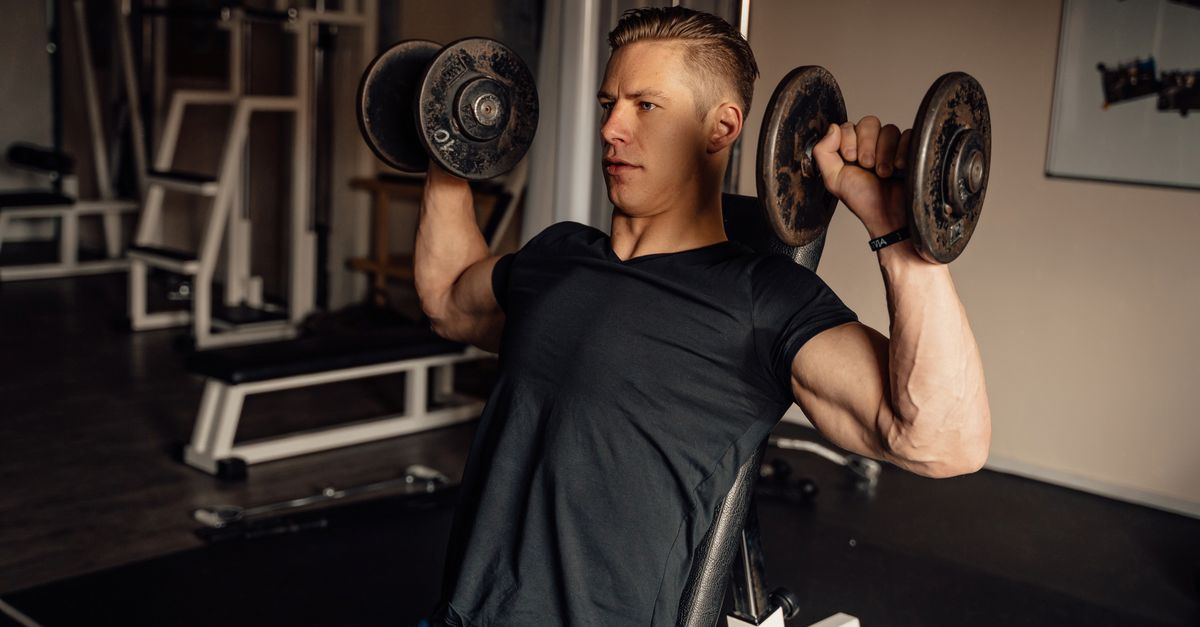
For the dumbbell shoulder press, start with the dumbbells at shoulder height, press straight up without flaring your ribs, and stop just short of locking out to keep tension on the muscle. The Arnold dumbbell press begins with your palms facing you, then rotates to palms-forward as you press. That rotation sweeps through more of the front and side delt in a single rep, so move it slowly and let the turn happen, not the speed.
The raises are about control, not weight. For the side lateral raise, lead with your elbows and lift to shoulder height with a slight forward tilt, as if pouring from two jugs. Going higher just hands the work to your traps. For the front dumbbell raise, lift one or both dumbbells to eye level with a soft elbow and lower under control. For rear-delt work, the seated bent-over rear delt raise and reverse flyes both ask for a flat back and a squeeze between the shoulder blades at the top. Light dumbbells and clean reps beat heavy swinging every time here. Johns Hopkins Medicine has a clear primer on how strength training works and why technique drives the result.
If you want to swap a move or add variety, the full shoulder exercises library gives you a video and form guide for every option, and you can browse the whole exercise library by muscle group.
Sets, reps, and how to progress
The plan presses in the 8 to 12 rep range and raises in the 12 to 15 range. That spread covers both the strength that drives overhead pressing and the muscular endurance that shapes the smaller heads of the delt. Mayo Clinic notes that even a single set taken close to fatigue can build strength for most people, so three or four focused sets give a strong stimulus without burying you in volume. Their strength training guidance is a solid reference for set and rep basics.
Progress with a method lifters call progressive overload, which simply means doing a little more over time. When you can finish the top of the rep range with clean form on every set, pick one change for next session: add a small amount of weight, add one rep per set, or trim your rest by ten to fifteen seconds. Change one thing at a time so you can see what actually drives your progress.
Keep a short log. Two lines per session, the weights you used and how the last set of presses felt, turns guesswork into a plan you can trust. Recovery is part of the program, not a break from it, so give your shoulders at least a day before you train them hard again and treat sleep and food as part of the work.
Do not skip the rear delts
The single most common mistake in shoulder training is living on the front delt. People press in the mirror, chase the muscles they can see, and let the rear delt waste away. That imbalance rounds the shoulders forward, flattens the back of the delt, and feeds the aches that come from a shoulder that pulls in only one direction.
The fix is built into this workout. The rear-delt raise, the reverse flye, and warm-up face pulls all train the back of the shoulder and the muscles that hold good posture. Rear-delt work with dumbbells is also low risk and easy to feel once you slow it down, so there is no reason to cut it when you run short on time. If anything, treat the rear delts as the priority and the mirror muscles as the bonus. A balanced shoulder looks better from every angle and holds up far longer.
The National Institutes of Health resource on strength training is a good reminder that muscle is built in recovery, when you rest and eat, not only during the session itself.
How to program it into your week
A dumbbell shoulder workout fits almost any split. On a three-day week, you can attach shoulders to an upper-body day or run them with your back for a full pull-and-press session. On a four-day upper-lower split, shoulders pair naturally with chest or back on one of your two upper days. Once or twice a week is plenty for most people, with at least 48 hours between hard shoulder sessions so the small muscles recover.
If you want a ready-made session that trains shoulders alongside your back in one efficient day, follow our dumbbell workout for back and shoulders, which pairs the two groups that already cooperate on every press and pull. Consistency beats intensity here. Two steady sessions a week that you actually finish will build more shoulder than an ambitious five-day plan you abandon by week two.
Three mistakes that keep shoulders flat
The first mistake is going too heavy on raises. A side or rear raise moves a long lever with a small muscle, so the moment you start swinging, momentum takes over and the delt stops working. If the weight jerks off the bottom or your torso rocks to launch it, drop down a size and keep the movement strict.
The second is pressing in too narrow a range. Cutting the press short at the top or stopping well above shoulder height robs the movement of the stretch and contraction that build size. Press to just short of lockout, then lower until your upper arms reach roughly shoulder level before driving up again.
The third is treating every session as a max-out. Shoulders are small, much-used joints that respond to consistent, gradually heavier work, not to grinding ego lifts that leave them sore for a week. Pick weights you can control for every prescribed rep, add a little at a time, and let the months do the work. Slow, clean progress builds shoulders that look good and keep working for years.
Fueling shoulder growth
Training is the signal and food is the raw material. Building or keeping muscle while you manage your weight asks for enough protein and a sensible overall intake, so nutrition belongs in any honest workout plan. Aim for a protein source at each meal, plenty of vegetables and fiber, and a calorie level that matches your goal. If you would rather have the planning done for you, our meal plans lay out ready-made days built around real recipes and macros that pair well with a strength routine like this one.
Frequently asked questions
How often should I do a dumbbell shoulder workout?
Once or twice a week is right for most people. The CDC recommends muscle-strengthening work that covers all major muscle groups on at least two days a week, and a shoulder session can be one of those days, either on its own or attached to an upper-body day. If you train shoulders twice, leave at least 48 hours between the hard sessions so the rotator cuff and the smaller heads of the delt recover. Beginners often progress fastest on just two sessions a week before adding more, since the shoulder responds well to consistent, gradually heavier work rather than constant pounding.
Can I build bigger shoulders with just dumbbells?
Yes. Dumbbells reach all three heads of the delt and let each arm work through a full, natural range, which is exactly what shoulder growth needs. Muscle grows in response to progressive resistance, and that resistance can come from dumbbells just as well as machines or barbells. What matters is that the effort gets gradually harder over time and that you train each head, not only the front delt that pressing already hits. With a pair of adjustable dumbbells and steady progression on your presses and raises, you can build round, strong shoulders for months or years without any other equipment.
What weight should I use for shoulder raises?
Lighter than you expect, and earn the right to add load. Side, front, and rear-delt raises move a long lever with a small muscle, so they almost always need much lighter dumbbells than your presses. Pick a weight you can lift for the top of the rep range with two or three clean reps still in reserve, meaning you could have done a couple more without swinging. If your form breaks, your torso starts rocking, or the weight jerks off the bottom, you have gone too heavy. Drop down, keep the movement strict, and the muscle does the work instead of momentum.
Should I press or do raises first?
Press first. Overhead presses are the heaviest, most demanding moves in the session, and you want to attack them while you are fresh and coordinated. The raises that isolate the side and rear delts come at the end, when fatigue is fine because the loads are light and the goal is clean, controlled reps rather than maximum weight. If a specific head of the delt is your clear weak point, you can run one raise for it earlier in the session as a priority, but keep the bulk of your isolation work after the heavy pressing is done.