
Introduction
A calorie deficit is the foundation of any weight loss plan. Here's exactly how to create one, what to eat, and how to make it sustainable without feeling hungry.
Every weight loss plan — no matter how trendy — works through the same biological mechanism: a calorie deficit. You consume fewer calories than your body burns, and it turns to stored fat for energy. This isn't a theory; it's the most consistently replicated finding in nutrition science.
But there's a right way and a wrong way to create a calorie deficit. The wrong way leaves you hungry, tired, and likely to quit. The right way is sustainable and often surprisingly comfortable.
Table of Contents
- What is a calorie deficit?
- How to find your calorie target
- What to eat in a calorie deficit
- Sample day in a calorie deficit
- Common mistakes
- How to handle hunger
What is a calorie deficit?
A calorie deficit is the difference between the calories your body burns in a day and the calories you consume. If your body burns 2,000 calories per day and you eat 1,700 calories, you have a 300-calorie deficit, and your body will pull the remaining 300 calories from stored fat.
A deficit of 300–500 calories per day leads to steady fat loss of about 0.5–1 pound per week. A deficit of 500–1,000 calories leads to about 1–2 pounds per week. The CDC recommends losing weight at 1–2 pounds per week as the safest and most sustainable rate.
Larger deficits than that (crash diets under 1,000 calories) cause muscle loss, metabolic adaptation, and are almost never sustainable long-term.
How to find your calorie target
Start with your estimated maintenance calories. For most women, that's between 1,800 and 2,200 calories per day. For most men, it's between 2,200 and 2,800 calories per day.
To lose weight at a moderate pace, subtract 300–500 calories from your maintenance level:
- Moderate deficit: 300–400 calories below maintenance
- Larger deficit: 500–700 calories below maintenance (short-term only)
- Aggressive deficit: 700+ calories below maintenance (not recommended without medical supervision)
For a full breakdown of how to structure an eating plan around your calorie target, see our Complete Guide to Weight Loss Nutrition.
What to eat in a calorie deficit
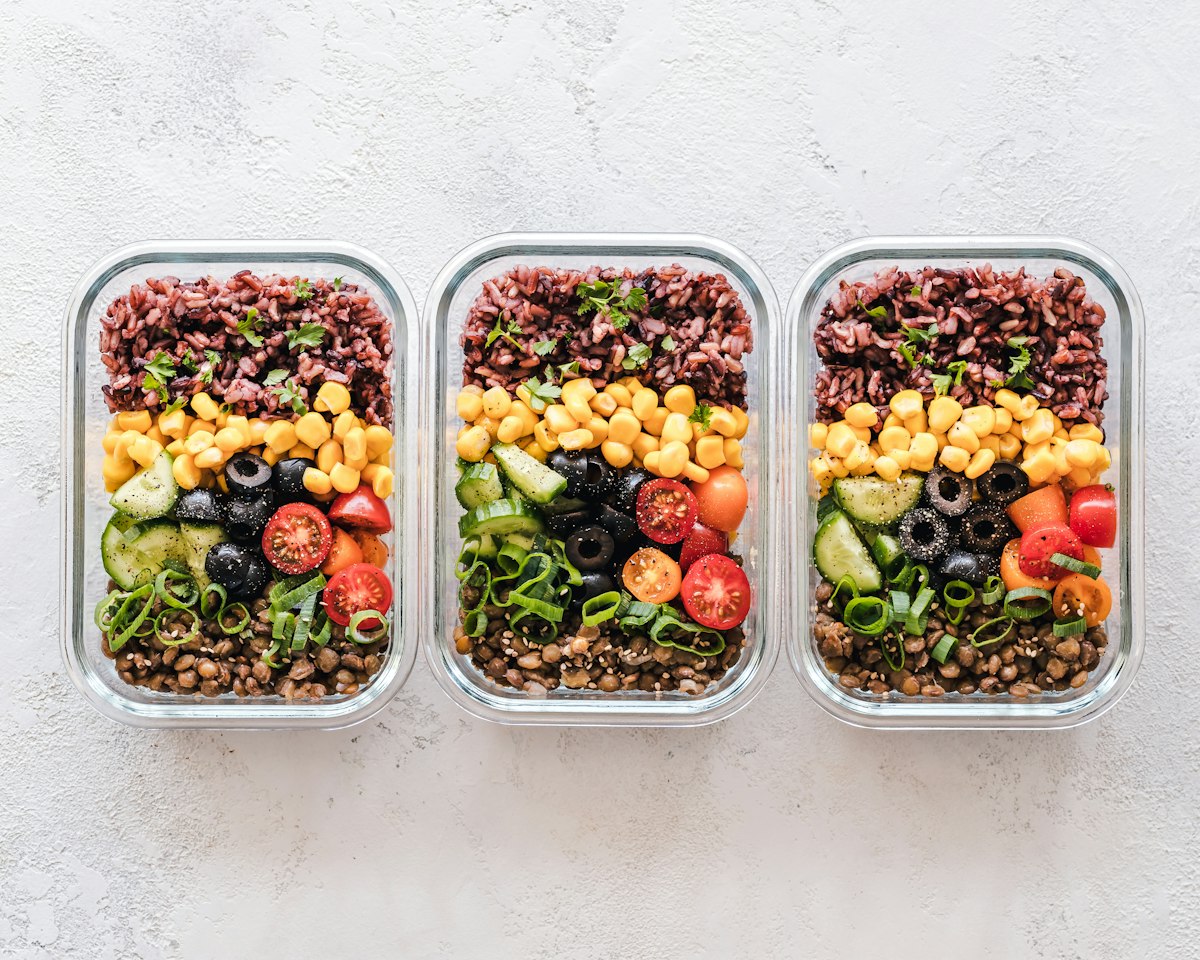
A calorie deficit doesn't mean eating less of the same food. It means eating differently — prioritizing foods that give you the most volume and nutrition per calorie.
The 80/20 rule
Eighty percent of your calories should come from nutrient-dense whole foods. Twenty percent can come from whatever else you want. This gives you flexibility while maintaining the overall quality of your diet.
Foods that make a deficit comfortable
| Food | Why it works |
|---|---|
| Leafy greens | Minimal calories, maximum volume — fill half your plate |
| Lean proteins (chicken, fish, tofu) | High satiety per calorie — preserve muscle |
| Legumes (beans, lentils) | Fiber + protein = hours of fullness |
| Vegetables | High water and fiber content — bulk up any meal |
| Whole fruits | Naturally sweet, high fiber, hard to overeat |
| Nonfat Greek yogurt | High casein protein — keeps you full |
A 2017 study in the Journal of Nutrition demonstrated that people who increased their protein and fiber intake while in a calorie deficit reported significantly less hunger than those eating the same deficit with lower protein and fiber.
Sample day in a calorie deficit
This plan runs approximately 1,600 calories with about 130 grams of protein:
Breakfast (380 cal / 35g protein): Greek yogurt (1 cup) with berries (½ cup) and two scrambled eggs on the side.
Lunch (450 cal / 40g protein): Grilled chicken breast (5 oz) over a large bed of mixed greens with chickpeas (½ cup), cucumber, tomato, and a light olive oil dressing.
Dinner (520 cal / 45g protein): Salmon fillet (5 oz) with roasted broccoli and cauliflower (2 cups total).
Snack (250 cal / 10g protein): Apple with 1 tablespoon peanut butter and a handful of almonds.
This is the same general structure used in our Mediterranean Diet for Weight Loss — just calibrated to a specific calorie target.
Common mistakes
Eating too little
A deficit of more than 500–700 calories per day puts you at risk for muscle loss, gallstones, nutritional deficiencies, and a slower metabolism. Your body adapts to starvation by burning fewer calories overall. This is why crash diets stop working after 2–3 weeks.
Not enough protein
When you're in a calorie deficit, your body would rather burn muscle than fat for energy — if you let it. Eating at least 1.6 grams of protein per kilogram of body weight per day shifts your body toward burning fat instead. That's roughly 110–160 grams of protein per day for most people.
Cutting out entire food groups
Low-carb diets and low-fat diets both work for weight loss because they create a calorie deficit. They don't work because carbs or fat are inherently bad. The data shows that the best diet is the one you can stick with.
How to handle hunger
A moderate calorie deficit shouldn't leave you constantly hungry. If you're hungry an hour after eating, your meals likely need more protein or more fiber. Try adding 10–15 grams of protein to each meal and see if the hunger subsides.
For more on how protein helps, read our guide to High-Protein Meals for Weight Loss.
FAQ
How do I calculate my calorie deficit?
Start by estimating your total daily energy expenditure. Multiply your body weight in pounds by 12 if you're sedentary, 13 if you're lightly active, 14 if you're moderately active, or 15 if you're very active. Subtract 300 to 500 calories from that number for a moderate deficit. For a more precise estimate, use the Mifflin-St Jeor equation which accounts for height, age, and sex.
Will a calorie deficit slow down my metabolism?
A moderate deficit of 300 to 500 calories does not cause significant metabolic slowdown. The metabolic adaptation that concerns most people occurs with extreme deficits of 800 to 1,000 calories or more. A 2016 study in the American Journal of Clinical Nutrition found that moderate calorie restriction produced minimal metabolic adaptation beyond what was expected from weight loss alone.
Can I still drink alcohol and stay in a deficit?
Alcohol contains 7 calories per gram with no nutritional value. A single drink can use up 100 to 200 calories of your daily budget. You can fit alcohol into a deficit, but it makes the deficit harder to maintain because alcohol reduces inhibition and often leads to poor food choices later in the evening. If you drink, track it and plan for it.
Why am I not losing weight even though I'm in a deficit?
A few possibilities. You may be underestimating your calorie intake — this is the most common cause. You may have lost initial water weight and now the fat loss is slower and harder to see day-to-day. Your maintenance estimate may be too high. Or you may be gaining muscle while losing fat, which keeps the scale steady. Wait two weeks before making any adjustments. If the trend line isn't moving down, reduce your intake by 100 to 200 calories or increase your activity level.
Find your numbers: use our TDEE calculator to estimate the calories you burn in a day, then subtract your deficit to get a daily target.