Introduction
A practical guide to building a weight-loss meal plan that sticks — calorie and protein targets, the plate method, fiber, meal prep, and ready-made plans.
Why a weight-loss meal plan actually works
Winging it at mealtimes is one of the most reliable ways to stall your progress. When you arrive at dinner hungry and underprepared, you default to whatever is fastest — and fastest rarely lines up with your goals. A structured weight loss meal plan removes that decision fatigue. You shop once, prep ahead, and follow a script instead of improvising under stress.
Research consistently shows that people who plan their meals eat more variety, hit closer to their calorie targets, and are less likely to rely on takeout. Planning also creates a feedback loop: you can see patterns in what works, adjust portions, and build a routine that eventually runs on autopilot. That consistency — not any single "perfect" food — is what drives long-term results. If you want the bigger picture on how food choices interact with fat loss, The Complete Guide to Weight Loss Nutrition is a solid starting point.
Setting your calorie and protein targets
Before you write a single meal into your plan, you need two anchor numbers: calories and protein.
Calories determine whether you lose, maintain, or gain weight. A moderate deficit of 300–500 calories below your total daily energy expenditure (TDEE) is enough to produce steady fat loss — roughly 0.5–1 lb per week — without tanking your energy or triggering excessive hunger. You can estimate your TDEE using an online calculator, then subtract from there. Avoid cutting below 1,200 calories (for most women) or 1,500 calories (for most men) without professional guidance, as very low intakes make it hard to meet nutrient needs.
Protein is the other non-negotiable. Adequate protein preserves lean muscle during a deficit, keeps you fuller longer, and has a higher thermic effect than fat or carbohydrate — meaning your body burns more calories just digesting it. A practical target for most people aiming to lose fat while keeping muscle is 0.7–1.0 g of protein per pound of body weight. If you weigh 170 lb, you're aiming for roughly 120–170 g of protein per day.
The Academy of Nutrition and Dietetics recommends working with a registered dietitian to personalize these numbers, especially if you have any underlying health conditions. This guide gives you a framework, not a medical prescription.
Building your plate: a simple visual method
Once you have your targets, the plate method makes it easy to hit them without counting every gram at every meal.
Divide a standard dinner plate (9 inches) like this:
- ½ plate: non-starchy vegetables — leafy greens, broccoli, peppers, zucchini, cucumber, tomatoes
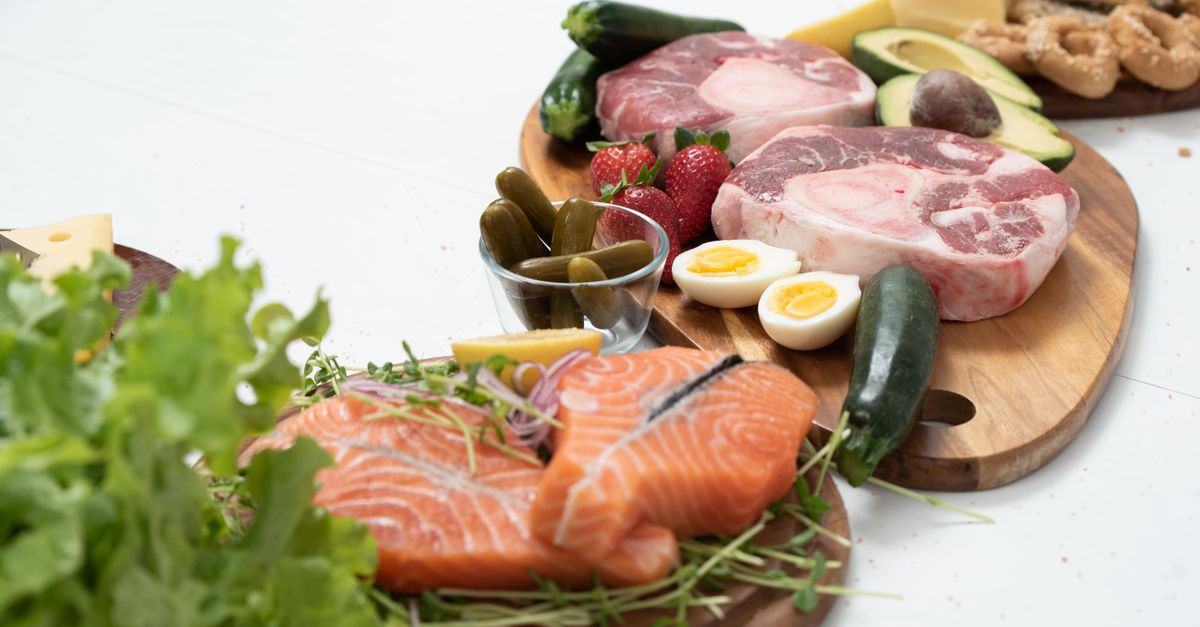
- ¼ plate: lean protein — chicken breast, fish, eggs, tofu, legumes, Greek yogurt
- ¼ plate: quality carbohydrates — brown rice, quinoa, sweet potato, oats, whole-grain bread
Add a small amount of healthy fat — a drizzle of olive oil, a quarter of an avocado, a handful of nuts — to support satiety and nutrient absorption. This structure aligns with Harvard's Nutrition Source on healthy eating and is flexible enough to fit nearly any cuisine.
Apply the same logic to breakfast and lunch. A smoothie bowl, a grain bowl, and a stir-fry can all follow the same proportions with completely different flavors.
Fiber and satiety: the underrated lever
Calories and protein get most of the attention, but fiber is quietly doing heavy lifting in any effective meal plan. Fiber slows digestion, stabilizes blood sugar, and signals fullness hormones — all of which reduce the likelihood that you'll raid the pantry an hour after dinner.
The USDA Dietary Guidelines for Americans recommend 25–38 g of fiber per day for adults, yet most people get less than half that. Closing the gap is straightforward: prioritize whole grains over refined ones, eat beans and lentils several times a week, keep fruit whole rather than juiced, and pile vegetables into every meal.
If you want a plan built specifically around fiber intake, the 7-Day High-fiber Weight-Loss Meal Plan maps it all out for you day by day.
Meal prep: the practical backbone
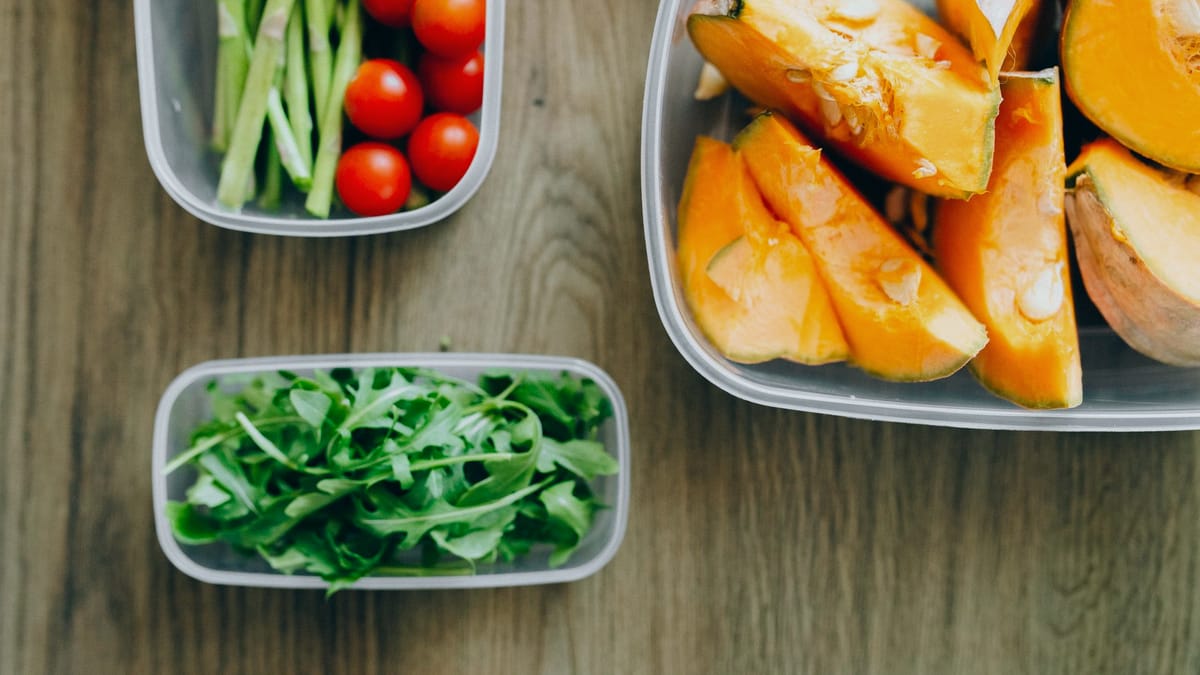
Knowing what to eat is half the battle. Having it ready is the other half. A simple Sunday prep session — 60 to 90 minutes — can set you up for most of the week:
- Batch-cook a protein source — bake a tray of chicken thighs or hard-boil a dozen eggs.
- Cook a big pot of grains — brown rice or quinoa keeps in the fridge for five days.
- Roast two or three vegetables — sheet-pan roasting requires almost no effort and transforms texture.
- Portion snacks — pre-bag nuts, slice fruit, portion yogurt so grazing stays controlled.
- Make one complete meal — a soup, chili, or grain bowl that works as lunches for three days.
This "mix-and-match" approach avoids the boredom of eating the same meal repeatedly. Rotate proteins and vegetables week to week. If you want a guided version, the 5-Day Meal-prep Weight-Loss Meal Plan walks you through the exact prep sequence.
Common mistakes that derail meal plans
Even well-intentioned plans fall apart. Here are the patterns to watch for:
Being too aggressive with calories. A steep deficit leaves you exhausted and hungry, making binges more likely. Slow and steady actually sticks.
Skimping on protein at breakfast. Starting the day with mostly carbohydrate spikes and crashes blood sugar, driving hunger by mid-morning. Anchor breakfast with at least 20–30 g of protein.
Ignoring liquid calories. Sweetened coffee drinks, juice, and alcohol can silently add 300–500 calories to your day. Track them or swap them out.
Planning too many new recipes at once. If every meal requires a new technique, the plan becomes exhausting. Rotate two or three reliable recipes each week and introduce one new one.
Not planning for social eating. Dinner out or a work event doesn't have to blow your week. Look at the menu ahead of time, lean on protein and vegetables, and don't restrict so hard during the day that you arrive ravenous.
For a broader look at keeping results long-term, Sustainable Weight Loss: How to Lose Weight and Keep It Off covers the mindset and behavioral shifts that complement your nutrition plan.
Staying consistent over the long haul
Consistency beats perfection every time. A plan that you follow 80% of the time for six months will outperform a flawless plan that you abandon after three weeks.
A few practical consistency habits:
- Anchor meals, not menus. Decide that Monday dinner is always some version of salmon and vegetables. The specific recipe can vary; the structure stays.
- Keep your kitchen stocked with defaults. Eggs, canned fish, frozen vegetables, Greek yogurt, and oats are inexpensive, fast, and forgiving.
- Pair your plan with movement you enjoy. Nutrition and exercise reinforce each other. If you're not sure where to start with activity, the Weight and Resistance Training for Weight Loss: Complete Guide explains how lifting preserves muscle during a deficit — which makes your calorie math more favorable over time.
- Review weekly, not daily. One off-meal doesn't matter. A week's pattern does. Look at your food log on Sunday, notice what's working, and adjust one thing.
For recipe inspiration that makes protein targets less tedious to hit, 7 High-Protein Meals for Weight Loss (Full Recipes) gives you complete, practical options for every meal slot.
Ready-made meal plans
If you'd rather start with a done-for-you template, here are plans built around specific goals and preferences:
- 7-Day High-Protein Weight-Loss Meal Plan — maximizes protein to protect muscle
- 7-Day Balanced Weight-Loss Meal Plan — structured moderate-calorie approach
- 7-Day High-Protein Weight-Loss Meal Plan (1,500 cal) — higher calorie target, still protein-forward
- 7-Day Vegetarian Weight-Loss Meal Plan — plant-based and protein-sufficient
- 7-Day High-Fiber Weight-Loss Meal Plan — prioritizes satiety through fiber
- 7-Day Mediterranean Weight-Loss Meal Plan — pairs well with the Mediterranean Diet for Weight Loss: A 7-Day Meal Plan guide
- 5-Day Meal-Prep Weight-Loss Meal Plan — designed around a single Sunday prep session
- Budget High-Protein Weight-Loss Meal Plan — hits protein targets without stretching your grocery budget
FAQ
How many calories should my weight-loss meal plan include? Most adults see steady fat loss in a range of 1,400–1,800 calories per day, depending on their size, age, sex, and activity level. Calculate your TDEE first, then subtract 300–500 calories. Avoid going below 1,200–1,500 calories without working alongside a registered dietitian.
Do I need to track every macro, or is the plate method enough? It depends on your goals and personality. The plate method works well for most people and requires no tracking app. If you have a specific body composition goal or you're not seeing results after several weeks, adding protein tracking — even just for a couple of weeks — can reveal gaps you weren't aware of.
How does exercise fit into my meal plan? Exercise raises your TDEE, which means you can eat a bit more and still maintain a deficit — making the plan easier to stick to. Resistance training in particular helps preserve muscle while you lose fat. The Strength Training for Weight Loss: Why Lifting Beats Cardio guide explains why that matters and how to structure your sessions alongside your nutrition plan.
Start with your calories: the TDEE calculator gives you a daily calorie target — then pick a meal plan to match it.